Why Your Body Can't Relax and How to Rewire It
You can be lying on the couch and still not be relaxed.
You can take a day off and still feel tense.
You can breathe, stretch, meditate, sleep eight hours, and still feel like your body is waiting for something to go wrong.
That is the difference between rest and regulation.
Rest is what you do.
Regulation is what your nervous system allows.
The short answer
Your body may struggle to relax when the nervous system is stuck in a protective state. This can happen after chronic stress, poor sleep, inflammation, trauma, pain, or structural interference that keeps the brain receiving threat signals. Relaxation techniques may help, but they often have a ceiling if the underlying inputs remain unresolved.
Your body is not ignoring you
When people cannot relax, they usually blame themselves.
They think they are anxious. Too busy. Too Type A. Too sensitive. Too addicted to stress.
Sometimes behavior plays a role. But often, the body is not failing to relax because the person is doing relaxation wrong.
The body is failing to relax because it does not feel safe enough to shift states.
The nervous system does not relax because you told it to.
It relaxes when the input says it can.
What threat mode feels like
Threat mode is not always panic.
It can look like:
- clenched jaw
- shallow breathing
- racing thoughts
- tight shoulders
- poor digestion
- waking at 2 or 3 a.m.
- feeling wired at night
- feeling exhausted during the day
- needing caffeine to function
- feeling overstimulated by normal life
- being unable to tolerate noise, light, or pressure
- bracing without realizing it
This is why many people say, “I am not stressed, but my body feels stressed.”
That statement is clinically useful.
It tells us the conscious mind and the body-state are not aligned.
Stress is not the same as dysregulation
Stress is a demand.
Dysregulation is the inability to return to baseline after the demand passes.
You can have a stressful week and still be regulated if your system can recover. You can also have a calm schedule and still be dysregulated if your body is receiving unresolved threat input.
That unresolved input can come from many sources:
- upper cervical interference
- chronic pain
- inflammatory load
- blood sugar instability
- poor sleep quality
- concussion or whiplash history
- emotional trauma
- overtraining
- under-recovery
- jaw tension
- vestibular stress
- constant screen and light exposure
The nervous system does not care whether the stressor is emotional, mechanical, metabolic, or inflammatory.
It cares whether the total signal feels safe.
Why breathwork and meditation help, but do not always hold
Breathwork can shift autonomic state. Meditation can change attention and threat perception. Exercise can improve stress resilience. Sleep routines can improve recovery signaling.
These tools matter.
But for some people, the benefit fades quickly.
They feel better during the practice, then go right back into tension.
That is not because the tool failed. It means the nervous system is receiving other inputs that overpower the practice.
This is the ceiling.
If structural interference at the upper cervical spine is keeping the system guarded, if inflammation is high, if sleep is fragmented, or if pain signals are constant, self-regulation tools may help temporarily without changing the baseline.
The upper cervical connection
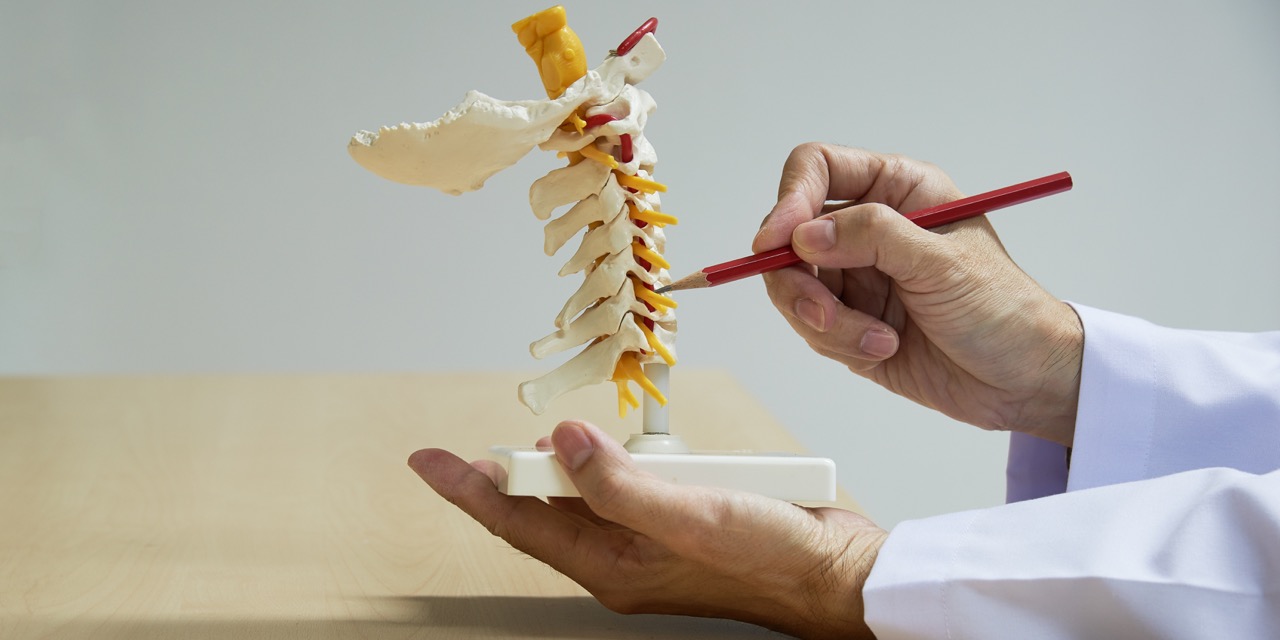
The upper cervical spine is one of the most important sensory regions in the body.
The atlas and surrounding muscles, joints, and ligaments give the brain information about head position, movement, balance, and threat.
If that input is distorted, the nervous system may increase muscle tone and protective output.
That can feel like chronic bracing.
People often describe it as:
- “My shoulders never drop.”
- “My neck is always tight.”
- “I hold tension at the base of my skull.”
- “My body feels like it is preparing for impact.”
That is not random tension. It may be the body trying to create stability around interference.
How inflammation keeps the system alert
Inflammation is another major reason the body may struggle to relax.
Chronic inflammatory signaling can affect pain sensitivity, fatigue, mood, immune function, and recovery. It can also keep the nervous system more reactive.
This is why the conversation cannot stop at mindset.
A person may be doing all the mental work and still feel dysregulated if the body is inflamed, poorly recovered, or mechanically guarded.
Regulation is biological.
How we assess this at Foresight
We don't ask patients to prove they are stressed.
We look for the pattern.
A comprehensive neurological assessment may include:
- HRV scanning to evaluate autonomic adaptability
- Surface EMG to identify muscle tension patterns
- Thermography to assess autonomic temperature patterns
- upper cervical structural analysis
- posture and compensation assessment
- history review for concussion, whiplash, trauma, jaw tension, poor sleep, migraines, or chronic fatigue
The goal is not to label the person as anxious.
The goal is to find the interference keeping the body in protection mode.
What rewiring actually means
Rewiring is an overused word.
At Foresight, it doesn't just mean positive thinking. It doesn't mean ignoring symptoms. It doesn't mean forcing calm.
It means changing the input the nervous system is using to make decisions.
That may include:
- correcting upper cervical interference
- improving spinal motion
- reducing muscle guarding
- improving HRV and recovery patterns
- lowering inflammatory load
- changing breathing mechanics
- improving sleep consistency
- rebuilding tolerance to movement and stress
The body learns safety through repeated accurate input.
When the input changes, the output can change.
When anxiety needs mental health support
Nervous-system dysregulation can overlap with anxiety, but it is not a replacement diagnosis.
If anxiety is persistent, severe, or interfering with daily life, mental health support matters. Therapy, medication, and medical care can be appropriate and necessary.
A nervous-system approach doesn't shame those tools.
The stronger position is integration: support the mind, support the body, and investigate the physiology that keeps the alarm on.
What to do next
If your body can't relax even when your life is calm, don't stop at asking what is wrong with your mindset.
Ask what your nervous system is responding to.
The body does not relax because you forced it, it relaxes when the signal changes.
References
1. Kim HG, et al. Stress and heart rate variability: A meta-analysis and review. Psychiatry Investigation. 2018. https://pmc.ncbi.nlm.nih.gov/articles/PMC5900369/
2. Herman JP, et al. Regulation of the hypothalamic-pituitary-adrenocortical stress response. Compr Physiol. 2016. https://pmc.ncbi.nlm.nih.gov/articles/PMC4867107/
3. Shaffer F, Ginsberg JP. An overview of heart rate variability metrics and norms. Front Public Health. 2017. https://pubmed.ncbi.nlm.nih.gov/29034226/
4. Furman D, et al. Chronic inflammation in the etiology of disease across the life span. Nature Medicine. 2019. https://pubmed.ncbi.nlm.nih.gov/31806905/
5. National Institute of Mental Health. Anxiety disorders. https://www.nimh.nih.gov/health/topics/anxiety-disorders