Real recovery isn't about how sore you feel. It's about whether your autonomic nervous system has shifted out of training stress and back into a state where adaptation can actually happen.
This distinction matters because the patient who comes in describing "I just can't recover anymore" is usually right — but usually for a different reason than they think. They assume it's an age thing, a training-load thing, or a sleep thing. Sometimes it is. Often the underlying issue is that their autonomic system has lost the capacity to flex between activation and recovery, and no amount of additional rest fixes that until the underlying capacity is rebuilt.
What recovery actually is
Training is sympathetic activation. The body breaks down tissue, depletes glycogen, and accumulates inflammatory signaling. Recovery is the opposite process: parasympathetic activation, tissue repair, refueling, and the dampening of inflammatory cascades.
Both states are autonomically driven. A nervous system that can shift cleanly between them recovers well. A nervous system stuck in sympathetic dominance, even when you stop training, can't access the parasympathetic state where adaptation occurs.
Heart rate variability is the most direct measurement of this capacity. After a hard session, HRV drops — that's the sympathetic load registering. Over the next 24 to 48 hours, HRV should rise back to or above baseline as parasympathetic recovery does its work. If HRV stays suppressed for days, the system isn't recovering. If the baseline gradually drifts down over weeks, the autonomic ceiling is being eroded.
This isn't theory. Tsuji's analysis of the Framingham Heart Study cohort established that low HRV is an independent predictor of mortality. The same physiology that determines long-term health also determines short-term recovery from training. Athletes who track HRV are using the same metric clinicians use to assess cardiovascular reserve and autonomic flexibility.
Why patients hit recovery walls
The pattern we see in practice is consistent. An athlete (or a recreationally active patient) has been training reliably for years. Performance is plateauing. Workouts feel harder than they should. Recovery time is increasing. Sleep quality is dropping. Resting heart rate is creeping up. HRV — if they're tracking it — is sliding down.
The first instinct is usually to train harder or eat better. Sometimes the second is to take more recovery days. Both can help marginally. Neither addresses what's actually happening.
What's happening is autonomic depletion. The system has been carrying a chronic sympathetic load — sometimes from training, but often from cumulative inputs: work stress, sleep debt, inflammatory diet, post-concussion sequelae, structural drivers of sympathetic dominance. The training load wasn't the only thing the system was managing. It was just the last input added.
When the load exceeds capacity, recovery stops working the way it used to. Adaptation slows. Injury risk rises. The athlete who used to bounce back in 24 hours now needs 72.
In short: Recovery is autonomic. HRV measures it. When recovery slows or stops, the bottleneck is usually autonomic capacity, not training programming or rest days. Until autonomic capacity is rebuilt, additional rest produces diminishing returns.
Where recovery fits in
Recovery sits at the output layer of the Human OS model, measured by HRV and felt as performance, sleep, and energy. But it's also a feedback signal — when output recovery is poor, it usually reveals interference upstream.
The interference layer is where most recovery problems actually live. Structural drivers of chronic sympathetic outflow (upper cervical misalignment, post-concussion sequelae, persistent neck and shoulder compensation patterns) keep the autonomic system in low-grade activation continuously. Add training stress on top, and the system has no way to recover.
The pattern responds to structural correction in a way that's measurable. HRV trends up across visits. Patients describe workouts feeling restorative again rather than depleting. Sleep quality improves. The capacity to absorb training load returns.
What we see clinically
Athletes who come in for performance and recovery work fall into a few clusters.
The post-concussion population is the most common. A high school or college concussion that "resolved" but left the upper cervical spine compensating chronically. The athlete adapts. Years later, recovery problems show up that look like overtraining but track back to that injury.
The chronic sympathetic-dominance group. High-performing professionals who train hard, work hard, and have been doing so for years. The training stress isn't the problem; the system was already maxed and training was the visible part of the load.
The competitive recreational athletes hitting a wall in their 30s or 40s. Training capacity that worked at 25 stops working at 35. Often there's a missed structural component compounding age-related changes.
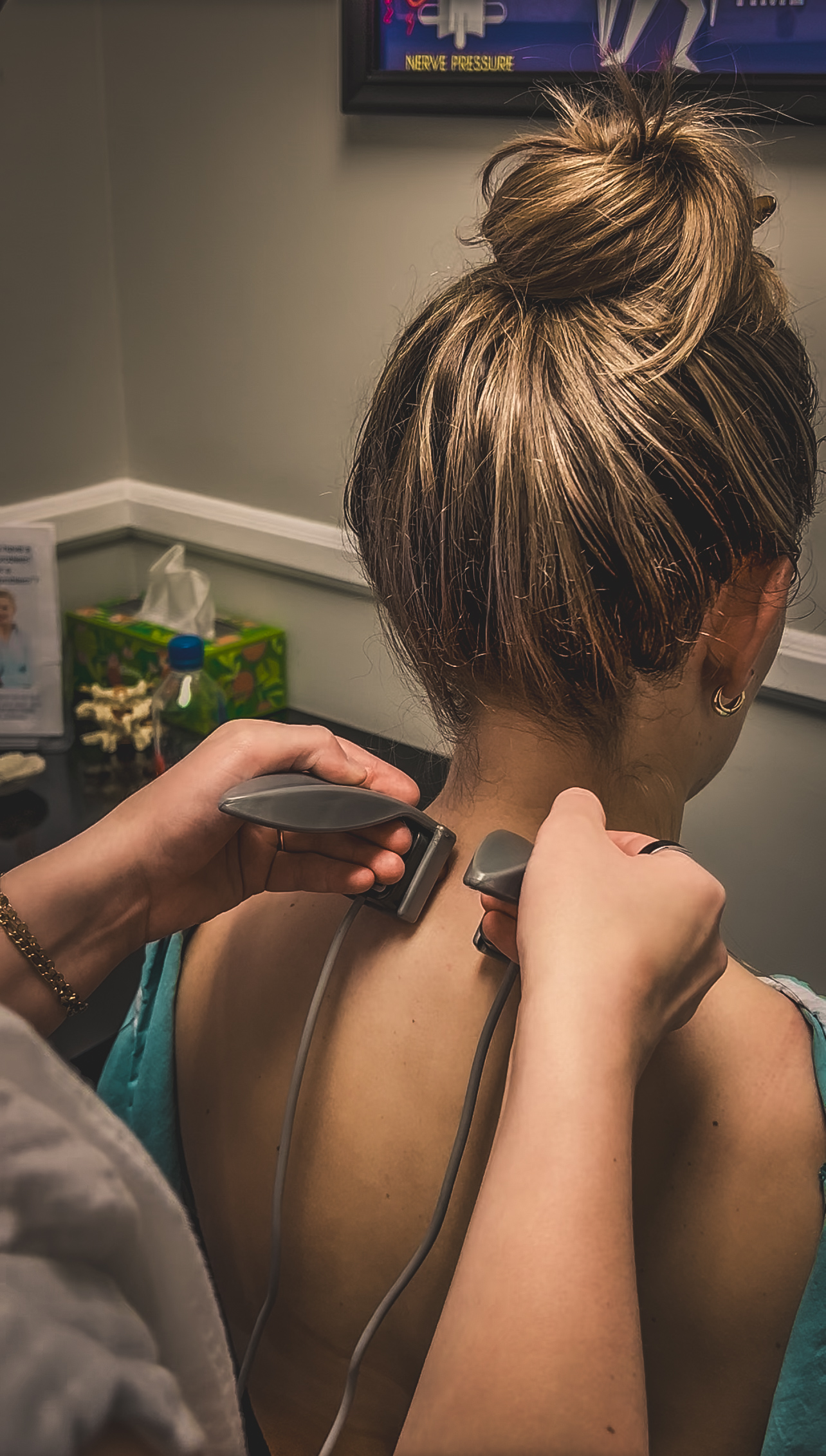
For all of these, the assessment is the same: thermography for sympathetic asymmetry, sEMG for muscle activation patterns, HRV for autonomic baseline, and upper cervical x-rays for the structural picture. The data tells us whether structural correction is the missing piece.
Practical: how to read your own recovery
If you're tracking HRV at home (Oura, Whoop, Polar H10 with an app), the trend matters more than any single day. A few signals worth attending to:
Baseline drift. Your morning RMSSD trending down over weeks signals autonomic erosion. The system isn't fully recovering between sessions. Reduce load, sleep more, address inputs.
Failure to rebound. After a hard session, HRV should drop and return to baseline within 24-48 hours. If it stays suppressed for 3-5 days, the system can't absorb that training stimulus and you're losing more than you're gaining.
Sustained suppression. Multi-week HRV depression suggests you've crossed the line from training stress to chronic overload. Behavioral interventions (sleep, food, deload) come first. If those don't move HRV, structural assessment is the next step.
Disconnect between subjective and objective. "I feel fine but my HRV is in the toilet." The subjective feel can lag the objective measure by weeks. Trust the numbers when they conflict with how you feel.
When recovery problems aren't structural
Not every recovery wall has a structural driver. Common alternatives:
Underfueling. Chronic energy deficit, particularly common in endurance athletes and women, drives autonomic suppression. RED-S (Relative Energy Deficiency in Sport) is real and often missed.
Subclinical anemia or low ferritin. Iron deficiency without anemia can crash recovery capacity. Worth a lab panel.
Hidden inflammation. Subclinical infections, gut issues, or autoimmune processes can suppress HRV chronically.
Mental load. Sustained psychological stress (work, caregiving, relationships) is sympathetic activation regardless of whether you're training. Often invisible until it's named.
The assessment captures what's structural. When it's not the answer, we'll tell you and point you toward what is — usually functional medicine, sports nutrition, or sports medicine depending on the picture.
Schedule your assessment
If recovery has been deteriorating and the usual interventions haven't restored it, the structural assessment is the piece that's frequently missing. The first visit is a consultation, full assessment, and upper cervical x-rays. HRV measurement is part of every visit, and the trend across visits tells us whether autonomic capacity is rebuilding.
Schedule Your Assessment Today
References
1. Plews DJ, Laursen PB, Stanley J, Kilding AE, Buchheit M. Training adaptation and heart rate variability in elite endurance athletes: opening the door to effective monitoring. *Sports Medicine.* 2013;43(9):773-781. doi:10.1007/s40279-013-0071-8
2. Stanley J, Peake JM, Buchheit M. Cardiac parasympathetic reactivation following exercise: implications for training prescription. *Sports Medicine.* 2013;43(12):1259-1277. doi:10.1007/s40279-013-0083-4
3. Tsuji H, Venditti FJ Jr, Manders ES, et al. Reduced heart rate variability and mortality risk in an elderly cohort. The Framingham Heart Study. *Circulation.* 1994;90(2):878-883. doi:10.1161/01.cir.90.2.878