Your brain doesn't decide whether you're safe based on your thoughts. It decides based on the signals your body is sending it.
Every joint, every muscle fiber, every vertebra is broadcasting status to your brainstem continuously. The way you hold your body — how compressed, how braced, how upright, how open — is one of the loudest inputs in that signal stream. If the signals say "the system is under threat," your brain responds to a world that matches. If the signals say "the system is open and stable," your brain responds to a different one.
This isn't a metaphor. It's how the autonomic system reads its own host.
Neuroception, in plain terms
Your nervous system is running a continuous scan called neuroception (Stephen Porges, polyvagal theory). It checks three streams of data:
- Exteroception — what's coming in from the environment
- Interoception — what's happening inside your body
- Proprioception — where your body is in space and how it's structured
Of those three, the inputs you have the least conscious access to are interoception and proprioception. They're also the inputs the brain weights most heavily for safety. You can think you're fine. Your nervous system is checking whether your body agrees.
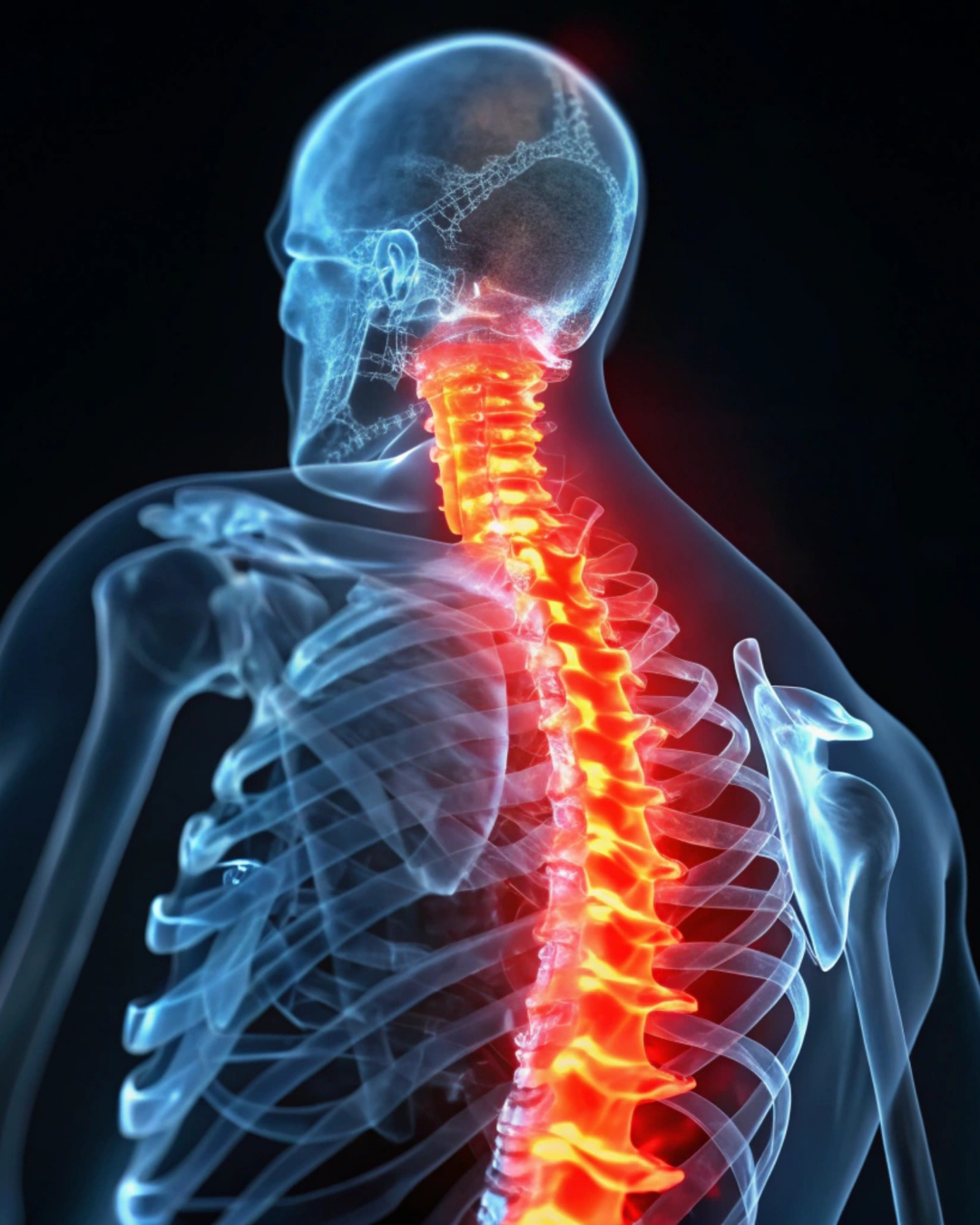
When the body is structured against threat (chest collapsed, shoulders rolled forward, jaw clenched, breath shallow, head pushed forward of the shoulders), the proprioceptive signal to the brainstem reads as "prepare for impact." The brain doesn't ask why. It responds. Cortisol rises. Heart rate elevates. The sympathetic system stays online. Emotions follow.
Why this matters more than the conventional view captures
The conventional view treats posture as a result of emotion. You're stressed, so you slump. You're confident, so you stand tall. The arrow is assumed to run one direction.
The mechanism runs both directions. Your body's structural state is constantly shaping the emotional state your brain produces. This is why people can do all the right cognitive work (therapy, breathwork, journaling) and still feel anxious. The body keeps voting for threat. The brain has to count those votes.
You feel this as:
- Tension that doesn't release no matter what technique you use
- Emotional reactivity that feels disproportionate to what triggered it
- A floor of low-grade anxiety that lifts briefly and returns
- Effort fatigue from constantly trying to manage state
This isn't a discipline problem. It's a signaling problem.
Why we lead with structure
Safety has to come before strength. You can't build a regulated nervous system on top of a body that's structurally telling its own brain to brace.
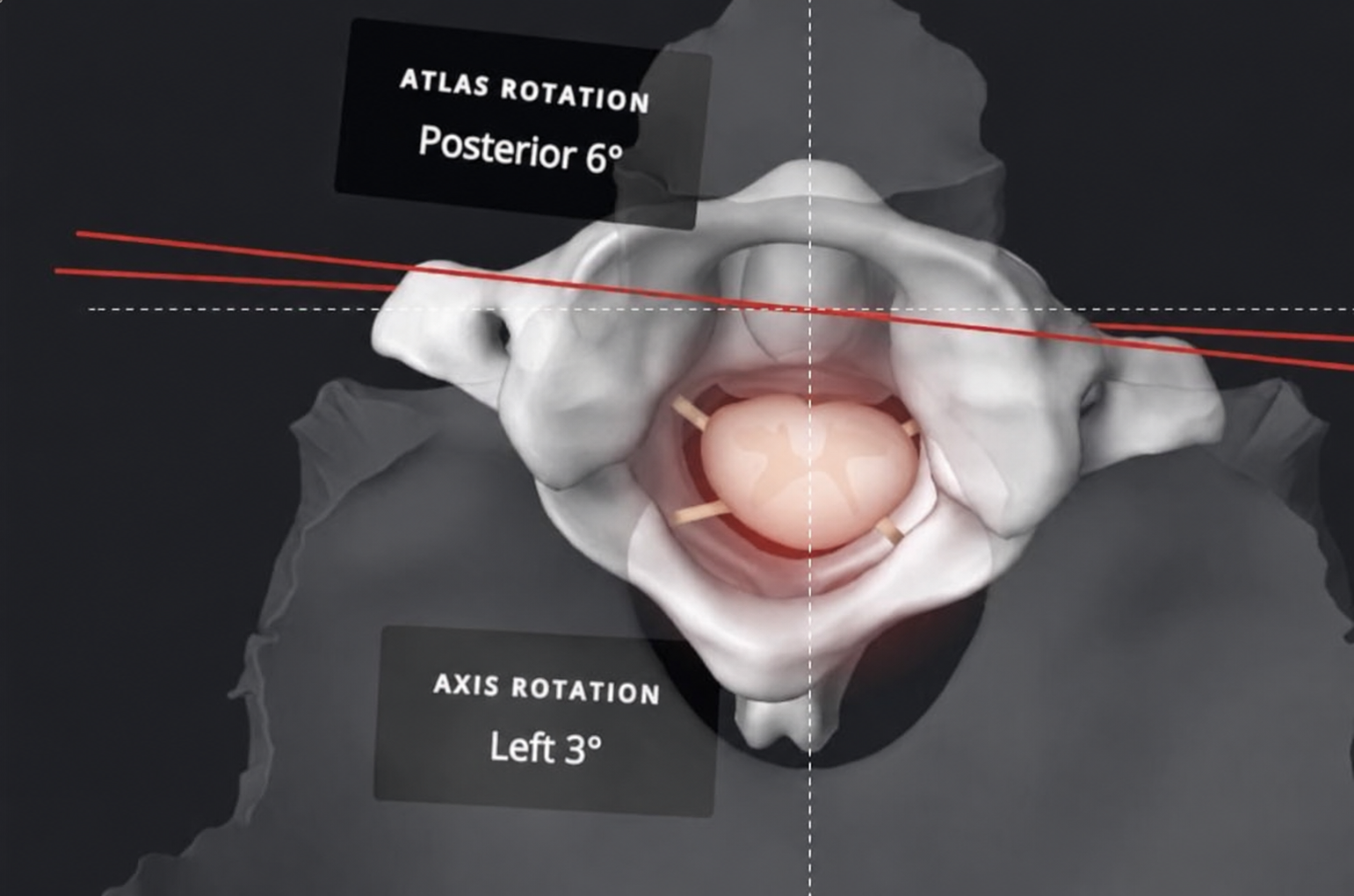
This is where the upper cervical spine matters more than any other region. The atlas, the top vertebra, sits directly around the brainstem. The brainstem governs the autonomic system. When the atlas is misaligned, the structural input the brainstem receives is distorted, and the brain reads a body that's never quite stable, regardless of what's happening externally.
Patients who carry chronic forward-head posture, old whiplash, or undetected upper cervical misalignment often present with classic dysregulation patterns: anxiety, sleep disturbance, jaw tension, digestive complaints, a sense of being "always on." The pattern resolves not by managing the symptoms but by correcting the input.
What we actually do
We baseline every new patient with imaging and a three-part autonomic assessment: HRV (parasympathetic capacity), sEMG (muscle activation patterns and chronic guarding), and thermography (autonomic and circulatory regulation). These give us a read on what the nervous system is actually doing, not what the patient assumes it's doing.
If the assessment indicates upper cervical involvement, we use Atlas Orthogonal: an instrument-based, low-force correction calculated from imaging geometry. We layer in Muscle Regen (AMIT) to release the muscular guarding patterns that have built up around the structural pattern.
Once the structural input clears, the brainstem starts receiving accurate signals. The body stops bracing for impact that isn't coming. Emotional regulation gets easier because the brain is no longer working against a body that keeps voting for threat.
The point
You can't talk your nervous system into safety. You have to show it.
Cognitive work matters. Breathwork matters. Sleep, nutrition, training all matter. None of it overrides the structural signal. When the body itself is sending the wrong message to the brain, the work upstream is what changes the conversation.
Safety comes first. Strength follows. Emotional regulation follows after that.
If you've been working on yourself and feel like you're hitting the same wall, the input your nervous system is reading may not be the one you think. We baseline every new patient with HRV, sEMG, thermography, and upper cervical imaging, so we can see what's actually happening before we recommend anything.