You can't think your way out of sympathetic dominance. You have to give your body different inputs, in the right order.
People stuck in fight or flight tend to know they're stuck. The harder problem is that the things you've been told to try — breathwork, meditation, walks, a cleaner diet — work in proportion to how regulated the system already is. When the nervous system has been stuck on alert for months or years, those tools become low-leverage. They help. They don't downshift the baseline.
Here's a practical sequence, from the cheapest, fastest inputs to the most upstream, for actually getting your body to release the brake.
Quick check: are you actually in sympathetic dominance?
The system runs on two modes:
- Sympathetic — alert, mobilized, output-oriented. Designed for short bursts of demand.
- Parasympathetic — recovery, digestion, repair. Designed to dominate at rest.
You're stuck when the sympathetic stays elevated even in contexts where it shouldn't. The pattern looks like:
- Wired-but-tired evenings
- Waking between 2am and 4am
- Tension you can't stretch out
- Digestion that doesn't keep up with food
- Anxiety with no specific trigger
- Heart rate variability that stays low even when you're resting
If three or more of these are constant, the system isn't responding to occasional stress. It's set to that state.
Layer 1: Inputs you can change today
These don't fix dysregulation. They lower the noise floor so the deeper work has room to land.
- Exhale longer than you inhale. A long exhale activates the vagus nerve directly. Four seconds in, eight seconds out, for two minutes. Do this on the hour for one day and notice what changes.
- Morning sunlight before screens. Ten minutes of outdoor light before any digital input anchors your circadian rhythm and pulls cortisol into the right shape for the day.
- Eat protein within an hour of waking. Blood sugar swings amplify sympathetic activation. Skipping breakfast or running on coffee alone teaches the nervous system to stay in scarcity mode.
- Move slowly on purpose. Walking. Mobility work. Low-intensity steady-state. Hard training before the system is regulated often makes things worse, not better.
- Build stillness without input. Five minutes a day of doing nothing, without a podcast or phone. Not meditation. Stillness, full stop. The system needs to experience the absence of demand.
These cost nothing and run in the background of normal life. They don't get you out of sympathetic dominance on their own. They make the next layers possible.
Layer 2: Inputs that take weeks to land
- Track HRV overnight. A wearable that measures HRV during sleep gives you a real signal, not a feeling. If your HRV is low for your age and not trending up over weeks of consistent Layer 1 work, the system is not downshifting. That's data, not failure.
- Address sleep architecture. Cool room, dark room, no screens within an hour of bed, last meal three hours before sleep. None of this is novel. It's still where most recovery leaks out.
- Reduce input load. Fewer notifications, fewer tabs, less ambient noise. The nervous system reads input volume as threat density, even when individual inputs are mild.
Layer 3: The structural input most people skip
This is where the work usually plateaus.
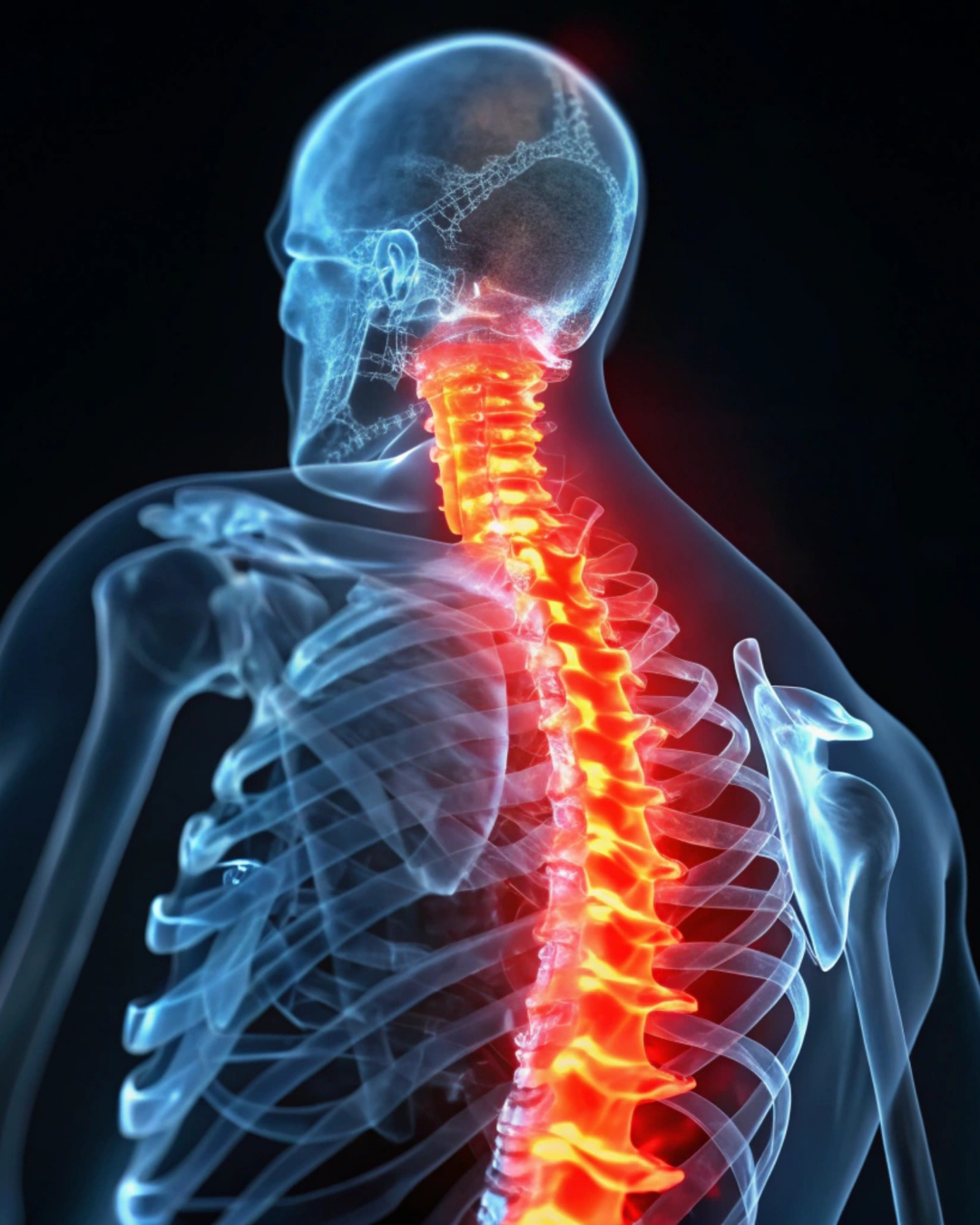
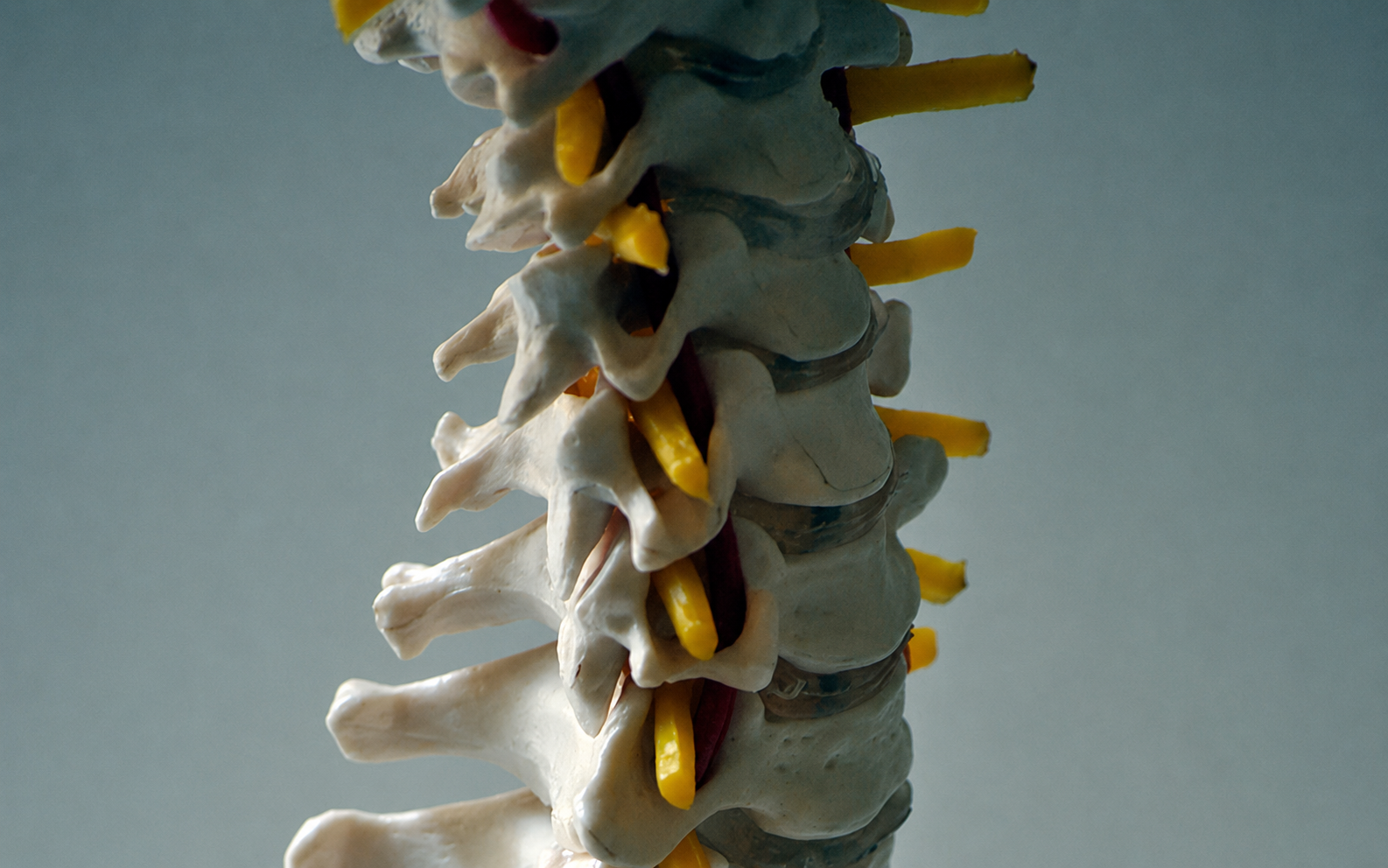
Your brainstem governs the autonomic system, including the threshold at which the body shifts into fight or flight. The atlas — the top vertebra in your spine — sits directly around the brainstem. When the atlas is misaligned, the structural input the brainstem receives is distorted. The body keeps reading threat signals that aren't matching the actual environment.
This is why Layer 1 and Layer 2 tools plateau. Breathwork, sunlight, HRV training, sleep hygiene all work when the hardware is sending accurate signals. When the structural input is off, the system has a ceiling it can't break through with software-level tools.
Atlas Orthogonal is an instrument-based, low-force structural correction calculated from imaging geometry. No twisting, no rotation, no manipulation. The corrective force is specific to the patient's measured misalignment. When the atlas is correctly positioned, the brainstem receives clean structural input, and the nervous system can finally read the environment accurately.
How we evaluate this clinically
We baseline every new patient with imaging and a three-part autonomic assessment: HRV (parasympathetic capacity), sEMG (chronic muscle guarding), and thermography (autonomic and circulatory regulation). These give us a measurable read on what the nervous system is actually doing, not what the patient assumes it's doing.
If the assessment indicates upper cervical involvement, we calculate the corrective vector from imaging and deliver the first correction at the second visit. We don't correct on the day of the assessment. The precision depends on the data.
The point
Layer 1 first. Layer 2 next. Layer 3 when the first two have plateaued.
People stay in Layer 1 forever, cycling through breathwork apps and supplement protocols, never getting to the input that's actually limiting the system. The order matters because the lower layers are what you can do without help, and the upper layer is what you can't.
If you've worked through the obvious layers and your HRV, sleep, and baseline tension haven't moved, the structural input is worth measuring. Schedule an assessment. We baseline every new patient with HRV, sEMG, thermography, and upper cervical imaging before we recommend anything.